Perforated, frosted, opaque or cling: which window film does what, inside and out.
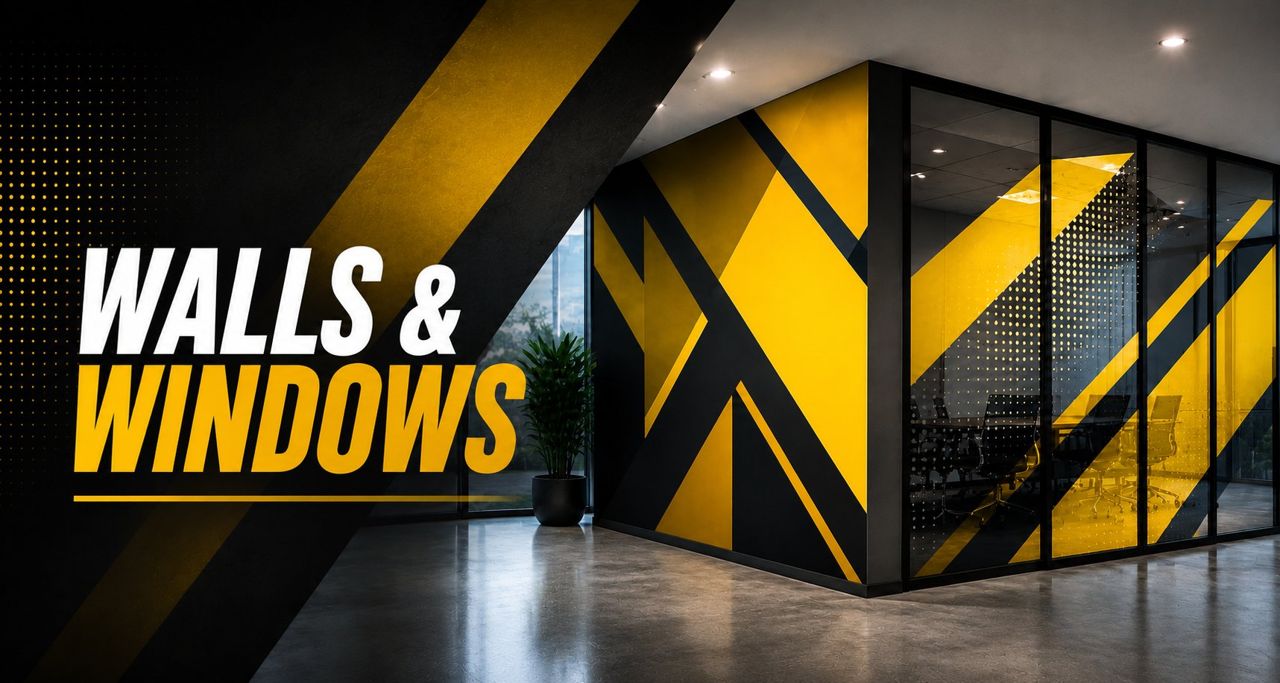
Window graphics are one product category with four very different materials inside it. The right choice depends on whether people need to see out, whether the graphic has to be seen from inside, how long it will stay up, and whether the glass is on a storefront, an office partition or a vehicle. This guide explains each type in plain terms so you can brief a designer and an installer without guessing.
Perforated film is printed vinyl with a regular pattern of small holes — typically 50 to 60 percent material and the rest open. From outside, in daylight, the eye reads the printed image. From inside, the eye looks through the holes and sees out. It is the standard for full-coverage storefront windows and vehicle rear glass. Two things to know: at night, with the lights on inside, the effect reverses and the graphic becomes hard to read from outside; and on vehicles, perforated film on the rear window should always get a clear optically-correct overlaminate so rain does not fill the holes and block the driver's view.
Frosted film gives glass the look of sandblasted or acid-etched glass: light passes through, detail does not. It is the workhorse of office partitions, conference rooms, clinic doors and anywhere privacy matters more than branding. Logos and patterns can be cut from it, or printed onto it for a two-tone look. Dusted and gradient versions soften the effect. Frosted film is applied to the inside surface, lasts many years indoors and is removable without damaging the glass.
Standard cut or printed vinyl blocks the view entirely. Cut-vinyl lettering — hours, logos, phone numbers, the classic storefront application — is opaque vinyl in its simplest form. Full opaque panels are used for coming-soon storefront covers, privacy on back-of-house glass, and bold brand colors. Translucent vinyl is the in-between option for lightboxes and windows that should glow with the graphic at night. Opaque films can be mounted first-surface (outside) or second-surface (inside, printed in reverse), and the choice affects durability and how the graphic reads.
Clings are for short promotions. Static clings hold by surface tension on clean glass and come off in seconds; low-tack adhesive clings hold better and survive temperature changes while staying easy to remove. Neither is a long-term solution, and both should be mounted on the inside of the glass unless the material is specifically rated for exterior use. For a monthly promo in a retail window, a cling is the right tool. For anything that has to look good for a year, it is not.
Where possible, mounting on the inside of the glass protects the graphic from weather, vandalism and cleaning crews, and inside-mounted graphics are printed in reverse so they read correctly from the street. Perforated film only works from the outside — the holes have to face the viewer. Exterior mounts need exterior-rated films and laminates, and they fail faster in sun, especially south- and west-facing glass. An installer will also check for low-E coatings and tinted glass that affect adhesion and, in some cases, can be damaged by dark films.
Measure each pane, note mullions and door hardware, photograph the glass from inside and out, confirm whether the building or landlord restricts window coverage, and check local sign codes — many cities limit the percentage of a storefront window that can be covered. Hand all of that to the installer with the artwork and the quote will be accurate the first time.
Wrap It! installs window graphics for storefronts, offices and fleets through certified installers nationwide. Send us the glass and we will recommend the right film and get it installed.
Send the scope and location. We'll match it to certified installers and manage the job through one point of contact.
Request a Quote